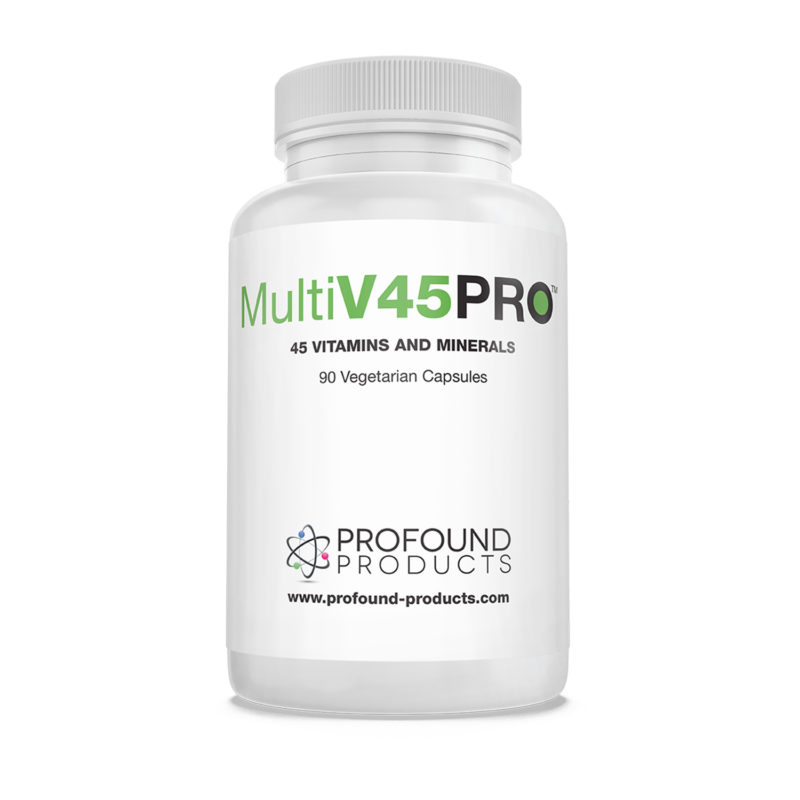
MultiV45PRO
Is a blend of an incredible 45 vitamins, ensuring that you receive all of the crucial nutrients and minerals needed in one simple supplement.
MultiV45PRO has an army of nutrients including the vitamins C, E, B2, B3, B5, B6, B1, folic acid, manganese, potassium and iron amongst many others.
Benefits Include:
Energy boost
Reducing tiredness and fatigue
Boosting metabolism
Normalises functions of the immune system
Aids to normalise heart functions
Aids in cognitive functions
This product features in the
following categories
This product has the
following ingredients
This product is associated with the following health conditions
Arteries Chronic fatigue syndrome Cognitive Dieting Energy Improvement Heart, arterial & blood health conditions Immune System Improvement Infection Influenza Insomnia Lack of Physical Energy Learning Disorders Memory Problems Narcolepsy (sleeping in the daytime) Sleep DisordersProduct Description
1 capsule provides: Capsule shell:
vegetable cellulose 120mg
Vitamin C (calcium ascorbate) 100mg
Vitamin E Natural 66.6iu (d-alpha tocopherol succinate) 44.6mg
Calcium (carbonate) 34.6mg
Inositol 33.3mg
Vitamin B2 (riboflavin) 33.3mg
Vitamin B3 (nicotinamide) 33.3mg
Vitamin B5 (d-calcium pantothenate) (pantothenic acid, calcium) 33.3mg
Vitamin B6 (pyridoxine HCl) 28mg
Vitamin B1 (thiamine HCl) 26.6mg
Citrus bioflavonoids 16.6mg
Para-aminobenzoic acid (PABA) 16.6mg
Choline (bitartrate) 15.3g
Dicalcium phosphate (calcium 4.4mg, phosphorus 3.4mg) 15mg
Magnesium (oxide) 13.2mg
Betaine (HCl) 8.3mg
L-glutamic acid 8.3mg
Rutin 8.3mg
Alfalfa (Medicago sativa 3.3mg
Glucomannan 3.3mg
Hesperidin (hesperidin, citrus aurantium extract) 3.3mg
Kelp (Ascophyllum nodosum) (iodine 2.3åµg) 3.3mg
Lecithin (SOYA) 3.3mg
Zinc (gluconate) 2.5mg
Apple pectin 1.6mg
Bromelain 1.6mg
Papain (maltodextrin) 1.6mg
Iron (gluconate) 1.3mg
Potassium (citrate) 667ug
Vitamin A acetate 1387.6iu (starch, maltodextrin, vitamin A, sucrose) 417ug
Manganese (gluconate) 333ug
Silica (dioxide) 333ug
Horsetail extract (4:1) 250ug
Folacin (folic acid) 133ug
Copper (gluconate) 100ug
Iodine (potassium iodine) 83ug
Biotin 33ug
Boron (as sodium borate) 33ug
Molybdenum (ammonium molybate) 33ug
Vitamin B12 (methylcobalamin) 33ug
Chromium (picolinate) 13ug
Selenium (L-selenomethionine) 3.3ug
Vitamin D3 132iu cholecalciferol (maltodextrin, starch, sucrose, vitamin D3) 3.3ug
Vitamin K2 (MCC powder, MCT oil, vitamin K2 MK-7) 3.3ug
Allergy advice – see ingredients in (CAPITALS) CONTAINS NO: gluten, wheat, lactose, added sugar, artificial preservatives or colourings. Suitable for vegetarians Approved kosher