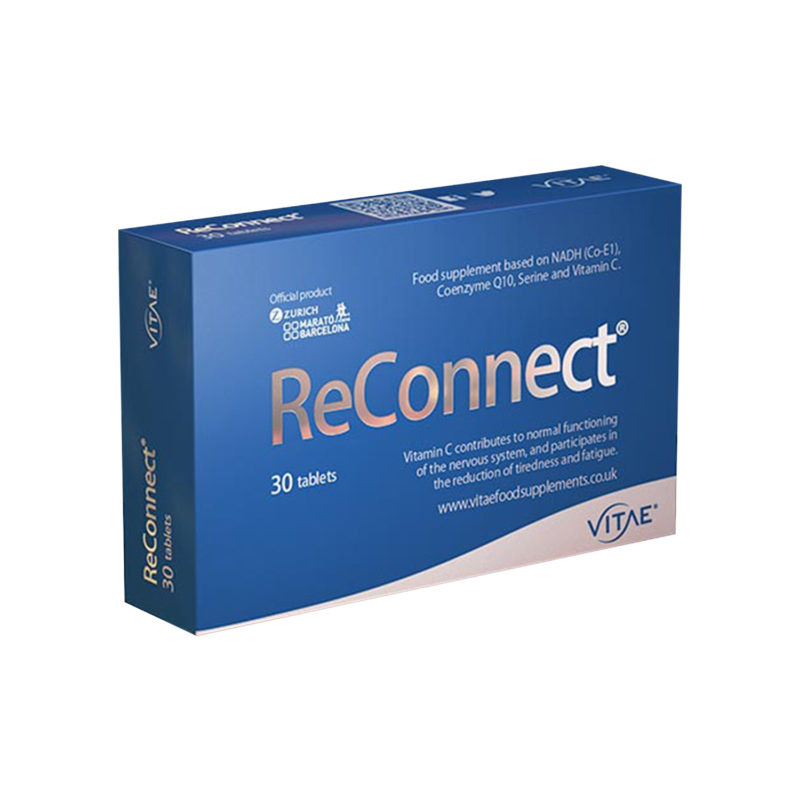
NADH is the abbreviation for the biological substance Nicotinamide-Adenine-Dinucleotide. It is also known as Coenzyme -1. This coenzyme-1 is a derivate of Vitamin B3 and functions as a catalyser in every cell in our body. In simple terms NADH which is produced in our daily food, is able to produce in conjunction with oxygen, energy in every cell and improves the cognitive performance, particularly alertness, attention and concentration.
This product features in the
following categories
This product has the
following ingredients
This product is associated with the following health conditions
Alzheimer’s Disease Antiaging Supplements Antioxidants Chronic fatigue syndrome Cognitive Concentration Problems Energy Improvement Lack of Creativity Lack of Physical Energy Longevity Enhancement Memory Problems Mental Stimulation Mitochondrial Support Parkinson’s disease Poor Sports Performance Senile dementia SenilityProduct Description
Aging brings with it less energy and a gradual decline in our cognitive ability – two things an NADH supplement can help with. Taking this essential antioxidant and cell energizer can give your body and mind the boost it needs.
But what is NADH? Found in all plants and animals, our cells use NADH every day as it’s involved in all the body’s energy production and cell development. The proteins, carbohydrates and fats we eat degrade into amino acids, sugars and lipids which are then processed to create NADH – the convertor of fuel to energy.
The most efficient natural intake of NADH comes from raw meat or fish because our digestion extracts it in greater amounts. For vegetarians, taking an NADH supplement is very important because of the low volume of NADH our digestion can extract from plant cells.
Unfortunately, the fast pace of modern life, pollution and chemicals added to our food mean the natural ways to derive energy from the things we eat can be affected. It’s for these reasons an NADH supplement can be of great benefit to many people of all ages.
NADH benefits are far reaching as it’s the most powerful antioxidant and it’s responsible for regenerating other key antioxidants too.
These antioxidants counteract the dangerous free radicals that are created as the by-products of our body’s processing of food and decrease the risk of heart disease, cancer, arthritis and many other ailments associated with aging.
NADH also assists the human immune system which depends on the defensive actions of our white blood cells.
One of the main white blood cell sub-groups is called macrophages which fight bacteria and viruses. There is a direct relationship between the intake and digestion process of the macrophages and the activation of the immune system.
When bacteria or viruses enter the body, the metabolic activity of macrophages causes an increase in oxygen consumption. Oxygen is converted to superoxide which destroys the bacteria and viruses. During this oxygen demand, high amounts of NADH are consumed. Hence, the more NADH that is available, the better the immune system works.
NADH benefits vital substances in the body by amplifying their positive impact. Each NADH coenzyme molecule can produce three units of ATP which is the major compound for storing energy in the body. One NADH molecule can also produce six molecules of dopamine, which is extremely important for helping your mental faculties.
The amplification occurs because NADH supports essential enzymes to create products in the body that humans need to survive. The nadh coenzyme enables the natural production line to keep on going.
It is also vital in making the popular supplement Coenzyme Q10 work as an effective antioxidant. Coenzyme Q10 is used to treat migraines, heart failure, gum disease, Parkinson’s disease, high blood pressure and diabetes. However, only when it’s combined with NADH does it become properly effective and beneficial.
Until recently, there was no way to supplement NADH by artificial means because it is sensitive to light, temperature, humidity and lactose which cause it to degrade rapidly.
However, work by the eminent Dr George Birkmayer has recently developed a more stable nadh supplement that can be taken to enhance the natural energy production of your cells, assist your daily battle against free radicals and support essential enzymes.
The NADH supplement can also be used to maximise the extent to which NADH Benefits people suffering from a number of serious conditions including Chronic Fatigue Syndrome, Fibromyalgia, Parkinson’s and Alzheimer’s.
For generally healthy people, taking NADH as a supplement is beneficial because it offers increased energy, improved reaction times, improved alertness, improved libido, and weight loss, and there are no significant NADH supplement side effects.
The recommended NADH dosage is 10mg to 20mg to be taken two or three times a day.
At last you can easily strengthen your immune system and give yourself more energy to fight infection and disease simply by taking the remarkable nadh supplement every day.
[productalsobuy]
Each unit of NADH is capable of generating 3 units of ATP, in a very real sense NADH is the energy-of-life coenzyme
James South MA, Oregon.
My father’s Parkinson’s disease symptoms are improved, even our doctor thinks so. NADH has been a Godsend for his condition.
L.A.D., Wisconsin.
Your new sublingual NADH is a great product and a most cost effective way to take this important supplement.
P.B.S., Oregon
NADH improves brain energy levels, which in turn helps to alleviate depression and reduce mental fatigue.
NADH (nicotinamide adenine dinucleotide) assists enzymes in the work they do throughout the body. NADH particularly plays a role in the production of energy. It also participates in the production of L-dopa, which the body turns into the important neurotransmitter dopamine.
Due to these three biochemical features of NADH, it has been evaluated as a treatment for jet lag, Alzheimer’s disease, Parkinson’s disease, chronic fatigue syndrome, depression and as a sports supplement.
For antiaging, take 2mg to 6mg sublingually (under the tongue) two or three times a day.
Related Product 1