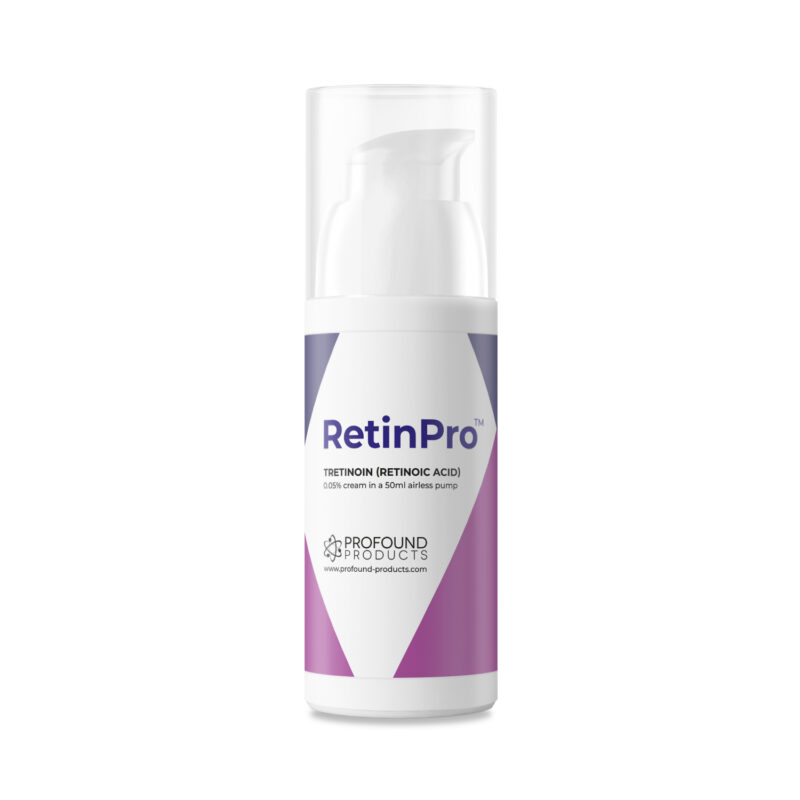
Rejuvenate skin and reduce the visible signs of ageing with Retin A for wrinkles, lines and creases. Retin A is an effective anti ageing cream and in just six weeks, tests have shown that by using Retin A wrinkles are reduced and fine lines can disappear.
Retin A cream contains tretinoin ( also known as ‘All-Trans Retinoic Acid’ or ATRA ) and when applied to the skin, Retin A acts to improve blood supply and increase the turnover of dead skin cells. The result being more youthful looking skin, with Retin A wrinkles are lessened, and general blemishes reduced, making Retin A for wrinkles and fine lines a viable part of the beauty regime.
Moisturisers and Anti ageing cream can have a positive effect on skin appearance, by helping to keep the skin supple and hydrated, but they won’t have the proactive ingredient in Retin A anti wrinkle cream, and the subsequent effect on wrinkles.
The tretinoin ingredient found in Retin A anti wrinkle cream is key. Tretonin is an acid form of Vitamin A, which leads Retin A to be classed as a retinoid – simply meaning a group of chemical compounds that are all chemically related to Vitamin A. It is this element that has the positive effect on skin appearance, especially when looking at the photoageing of the skin – or sun exposure. Anatomical studies of the microscopic structure of the skin tissue show that Retin A can reverse certain structural changes induced by sun exposure, setting Retin A apart as a truly effective anti ageing cream.
The signs of ageing on our skin are caused by a number of interconnected variables, combining internal and external factors. The inevitable natural ageing process and genetics conspire with sun exposure and photoageing, smoking, muscle use and even the effects of gravity to affect the condition and appearance of our skin.
The outer layer – the epidermis – begins to thin even though the number of cell layers remains the same. During this process, the number of pigment-containing cells called melanocytes decreases. The melanocytes that remain, increase in size. These two changes result in the thinner, more translucent appearance that we associate with ageing skin. In particularly sun-exposed areas, age spots or liver spots may also appear.
Wrinkles are caused by deterioration in the skin’s fibrous connective tissue known as collagen. Collagen is responsible for our skin’s strength and elasticity and forms the main structural component of the dermis (the lower layer of the skin between the epidermis and the below-the-skin subcutaneous tissues).
As we age, cellular proteins hook together or change shape. These changes keep the proteins from doing their jobs properly, and result in depleting collagen levels and less firmness to body tissues. This process, known as elastosis, eventually leads to wrinkles.
Thanks to its tretinoin ingredient, Retin A cream is especially powerful in combating the visible signs of ageing. While it may be hard to control external factors, we can do something about the effects of ageing such as wrinkles and fine lines.
According to the Australasian College of Dermatologists, creams such as Retin-A are especially useful for what dermatologists might class as the ‘milder’ changes of ageing including fine lines, wrinkles or roughness. It also may improve minor colour changes.
Applying Retin A cream is easy, and it should be used sparingly until completely absorbed. Side effects are rare and minimal. These can be avoided by slowly building up the strength of the cream as required.
Retin A can be used alongside moisturisers and can rapidly reduce wrinkles and fine lines in just six weeks. Even in this short period, the results can be quite astonishing - fine lines can completely disappear, severe wrinkles can be greatly reduced and the skin can regain a youthful glow.
Customers Who Bought This Item Also Bought
Disclaimer: Please note that only your own physician can determine your precise needs, but in order to give you some information these answers are based upon the ‘average person’ and clinical/ published results.
Is it true that Retin A is good for stretch marks?
Retin A has been used on stretch marks with some success. We would recommend starting with the 0.025% version first before moving on (if necessary), we would not recommend the 0.100% version for this as it is designed to remove acne and black spots and can burn.
How does the new Retin-A micro gel differ from the previous cream versions?
The new version is contained within a cell that sits on the skin’s surface. This helps to release the active ingredient more slowly and effectively and it also helps to remove more toxins from the skin too. In addition the gel produces less ‘shine’ effect on the skin’s surface and overall it is believed by many to be an advance in the delivery of retinolic acid to the skin.
Retin-A is available in three different strengths:
If you have never used Retin-A before, it is strongly recommend that you start with the lowest strength cream and if necessary, work your way up slowly.
Retin-A should be applied sparingly to the skin's surface until it has been completely absorbed. Initially you should do this 5 times a week and thereafter about 3 times a week. Avoid any contact with the eyes.
It is also recommended that you use a moisturizer and a high factor sunscreen because Retin-A increases skin sensitivity.
As with all medications whether taken internally or applied topically, Retin-A may cause some unwanted side effects. However, most people can tolerate Retin-A well. It is quite usual for Retin-A to cause a little skin reddening at first. This is due to the improvements in the skin’s blood supply.
More sensitive patients may also experience scaling, itching, and burning.
In all cases a gradual increase in the frequency and amount of Retin-A is best, as this allows for your skin to adequately adjust to the treatment. The advice of your health care professional should be followed.
As mentioned above, Retin-A increases skin sensitivity. This means that the risk of developing extreme sunburn is increased and extra care should be taken to prevent over exposure of treated skin to ultraviolet light. The use of high protection sunscreen and protective clothing, as well as avoiding exposure to sunlight during the middle of the day should be adopted.
Retin-A may also cause a thinning of the skin. Therefore, it is strongly recommended that patients who are using Retin-A should not remove hair from treated areas by waxing. This is because when hair removal wax is pulled off, the wax takes with it the top layer of epithelium (skin). A red, inflamed, sore mark will be left behind which will remain for several days. You should consult with your aesthetician or dermatologist to ascertain the most appropriate methods of hair removal to employ both during and after Retin-A use. You may be advised to wait anything from a few days to a few weeks after stopping Retin-A use before waxing again. Tweezing or threading (epilation) are acceptable hair removal alternatives both during and after Retin-A use.
Retin-A must not come into contact with the eyes. Rinse eyes immediately with cold water if accidentally placed there.
Do not apply Retin-A to skin suffering from psoriasis, eczema, or if you are suffering from a form of skin cancer, unless advised to do so by your doctor.
Tretinoin is a teratogen i.e. it is an agent that can cause birth defects. Although the risks of the topical application of Tretinoin (as in Retin-A) to the unborn child appear to be limited, women who are or may be pregnant, or who are seeking to become pregnant, are warned against using it.
Retin-A is an acne treatment that also removes wrinkles and improves skin appearance and condition.
Retin-A, containing tretinoin (sometimes called retinolic acid), derived from vitamin A, can reduce severe wrinkles within only 6-weeks and completely remove fine lines. Indeed, many expensive skin-creams currently on sale boast of their extremely minute quantities of retinolic acid!
Retin-A acts by improving blood supply to the skin, which in-turn increases the turnover of dead skin cells. Accordingly, new more subtle and younger looking skin appears at the surface. An additional use of Retin-A is to speed up the rate of skin repair after cosmetic surgery.
There are two versions of Retin-A available: The 0.05% cream, which is designed for wrinkles, and the 0.1% cream, which is designed for acne. If you have never used this product before, we strongly recommend that you start at the lowest dosage and if necessary, work your way up slowly.
Apply sparingly to the skin's surface until it has been completely absorbed, avoiding the eyes, at first 5 times a week, and thereafter about 3 times a week. Without your physician's advice, do not apply to skin suffering from psoriasis, eczema, or if you are suffering from a form of skin cancer.
It is recommended that a moisturizer be used, (see Neyskin or Only You) and in addition a high factor sunscreen (see Solaris). This is because Retin-A increases skin sensitivity.
Retin-A may cause skin reddening at first, this is quite normal as the skin's blood supply is improved and younger looking skin begins to appear presenting that youthful glowing affect.
Avoid the eyes. Rinse with cold water immediately if accidentally placed there.
It's true; after several weeks I saw even deep wrinkles on my skin disappearing and as I continue to use your Retin-A I don't see them coming back! This is a great anti-aging product!
L.C., Australia.
Using your Retin-A has been so wonderful that people keep asking me if I've had a face lift!
P.A.V.Z., Monaco